

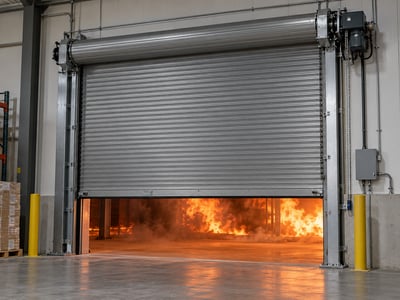
A rolling fire door can look like just another opening in a warehouse, distribution center, parking facility, or commercial building, until a fire occurs. Then it has one job: to close as designed to slow the movement of fire and smoke, protect exit routes, and help limit property damage. That job depends on much more than the door itself. It depends on the curtain or panels, tracks, counterbalance system, release device, operator, alarm connection, and clear opening all working together.

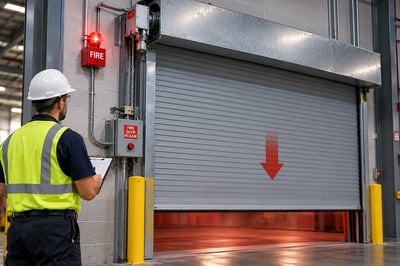
For facility managers and property owners, these fire-resistant doors are not equipment to leave on a repair list for later. A door that does not close completely, has been altered, or cannot release during an alarm event can create a serious safety and compliance issue. Regular inspection, drop testing, and qualified repair help keep this critical equipment ready for the moment it is needed.
What Makes Fire Doors Different?
Fire roll-up doors are rated assemblies designed to resist fire for a specified period when closed. In commercial and industrial settings, they are commonly installed at openings in fire-rated walls, including between warehouse areas, production spaces, storage rooms, parking structures, and other sections of a building.
Many facilities use rolling steel fire doors or fire-rated counter doors. Unlike a standard overhead door that opens and closes whenever an operator is activated, a fire-rated coiling door is typically designed to close automatically when it receives a signal from a fire alarm system, smoke detector, or fusible link. Depending on the assembly, the door may descend by gravity once the release device disengages.
The rating is only one part of the picture. A properly labeled door of this kind can still fail to perform if its path is blocked, its bottom bar is damaged, its guides are out of alignment, or its release mechanism has been bypassed. The complete assembly must be maintained in operating condition.
Why Fire Door Drop Testing Matters
A fire door drop test verifies that an automatic-closing door will release and close as intended. It is a functional test, not simply a visual check. During testing, a qualified technician evaluates how the door responds to its release mechanism and whether it travels through its full closing cycle without binding, stopping short, or striking an obstruction.
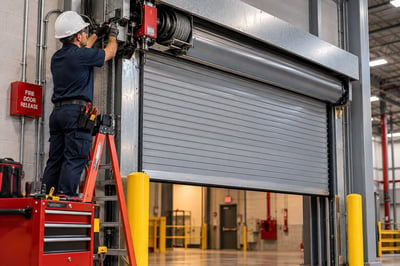
In a typical rolling fire door system, technicians may check the release device, curtain condition, guides, hood, bottom bar, counterbalance components, and signaling connections associated with the door. They also observe the door's descent and confirm that it reaches its closed position correctly. If an issue is found, it should be addressed before the door is returned to service.
Annual inspections and testing are commonly required under applicable fire door standards and local enforcement requirements. Exact obligations can vary based on the door type, building use, fire protection system, local code adoption, and direction from the authority having jurisdiction. A reliable service provider can help facility teams understand what their door systems require, document completed work, and identify problems before an inspection or emergency exposes them.
Testing should never be treated as a quick exercise in making the door move. Fire doors are heavy, spring-loaded mechanical systems. Improper testing can cause equipment damage or create an injury risk. It should be performed by trained professionals who understand both the door assembly and the required safety procedures.
Common Problems Found During Fire Door Inspections
Some fire door issues are easy to see. Others develop slowly and only become apparent during a test. Routine inspections are valuable because they catch both types before they affect safety or daily operations.
A blocked opening is one of the most common problems. Pallets, racks, staged materials, lift equipment, and temporary storage can prevent a fire door from closing. Even if the obstruction is moved before an inspection, it can return the next day unless employees understand that the door's travel path must remain clear at all times.
Damage to the curtain, slats, bottom bar, guides, or hood can also interfere with operation. In busy loading and production environments, forklifts and material-handling equipment can bend components without immediately putting the door out of service. The door may still open and close under normal operation, yet bind or fail to seat correctly during a gravity drop.
Release-device problems deserve special attention. A release may be disconnected, incorrectly adjusted, corroded, damaged by impact, or affected by changes to the building's fire alarm system. A powered operator should not prevent the fire door from performing its intended automatic-closing function. Any modifications to the opening, electrical equipment, alarm system, or door controls should be reviewed with the fire door system in mind.
Labels and signage matter, too. Fire-rated assemblies have identifying labels that help establish their intended use and rating. Missing, painted-over, or unreadable labels can complicate inspections and documentation. Replacing a component with a part that is not appropriate for the assembly can create similar concerns.
Fire Door Repairs Should Protect the Rating
Not every commercial door repair is a fire door repair. Standard sectional overhead doors, rolling service doors, and fire-rated rolling doors have different components and operating requirements. Using a general repair approach on a rated assembly can create problems, especially when a repair affects the door's closing function, guides, release device, or labeled components.
The right repair starts with identifying the cause of the failure. A door that stops halfway may have damaged guides, an issue with the release system, a curtain obstruction, or a counterbalance concern. A door that closes too quickly or unevenly may present a different set of mechanical issues. Replacing a visibly damaged part without evaluating the entire system can leave the underlying problem in place.
For facility operators, the practical goal is clear: restore safe operation while preserving the door assembly's required function. That may mean repairing damaged components, correcting alignment, replacing worn parts, reconnecting release equipment, or coordinating work with the fire alarm contractor when the systems interface. The scope depends on the specific door and the condition found during service.
Daily Practices That Help Keep Doors Ready
Professional service is essential, but building staff play a major role between scheduled visits. A few simple operating practices reduce the chance of an avoidable failure.
Keep the opening, floor area, and guide paths clear. Do not store inventory, trash containers, carts, or equipment beneath a fire door. If the opening is in a high-traffic area, mark the clear zone and reinforce the rule with staff and vendors.
Report impact damage promptly, even when the door still appears to work. A forklift strike that bends a guide or bottom bar can affect the door's ability to close during a fire event. The same applies to unusual noise, uneven travel, damaged slats, loose hardware, or a release device that looks disturbed.
Finally, avoid disabling or modifying controls to solve a short-term workflow problem. Taping, tying, disconnecting, or bypassing equipment may seem convenient during a busy shift, but it can turn a manageable repair into a safety and compliance failure.
Build Fire Door Service Into Your Maintenance Plan
Fire door service works best when it is planned rather than reactive. A maintenance schedule gives facility teams a clear record of inspections, testing, repairs, and recommendations. It also allows service technicians to spot wear before a door is unable to close, a scheduled inspection reveals a deficiency, or an emergency repair disrupts operations.
For buildings with multiple openings, an organized inventory is useful. Record each fire door's location, type, condition, service history, and any recurring issues. This makes it easier to plan budgets, coordinate access, and ensure that no critical opening is overlooked. It is particularly helpful for warehouses, multi-tenant properties, schools, healthcare facilities, and industrial sites where equipment changes hands or facility responsibilities are shared.
We provide commercial fire door drop testing, annual inspections, repairs, and maintenance support for facilities that depend on reliable overhead door systems. A knowledgeable local team can help protect your operations without losing sight of the details that matter during an inspection or emergency.
Schedule your garage door service. Contact our team of experts at 973-471-4060 or send us an email at info@loadingdock.com to get reliable service and the professional support your commercial and industrial garage doors and loading dock equipment deserve!