


When most people think about improving a warehouse or loading dock, they usually focus on large equipment upgrades, new commercial overhead doors, or warehouse automation systems. But sometimes, one of the biggest problems in a facility comes from something much smaller: air gaps.
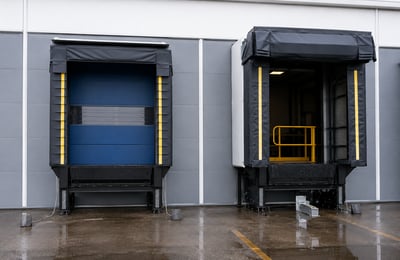 These systems are designed to improve energy efficiency, weather protection, and loading dock safety

Those tiny spaces around a trailer parked at the loading dock may not seem important at first, but over time they can quietly drain energy, reduce productivity, create safety concerns, and increase operating costs. In busy facilities throughout New Jersey and the New York City metro area, even small inefficiencies at the loading dock can quickly become expensive.
That’s why dock seals and dock shelters play such a critical role in modern warehouse operations.
Both systems are designed to help close the gap between the building and the trailer, improving environmental control and creating a safer, cleaner, and more energy-efficient loading dock. While they may look somewhat similar from a distance, they function very differently and each comes with its own advantages.
Understanding the differences can help facility managers, warehouse owners, and logistics operations make smarter decisions for their loading dock equipment. And in high-traffic commercial environments, choosing the right solution matters more than many people realize.
Why Loading Dock Gaps Are a Bigger Problem Than You Think
A loading dock is one of the busiest and most exposed areas of almost any commercial facility.
Trailers constantly back in and out throughout the day. Forklifts move products in every direction. Overhead doors open and close repeatedly. And every time there’s an unsealed gap around a trailer, outside air and contaminants enter the building. That can create several issues at once:
In the summer, hot humid air rushes into the facility. During winter, heated indoor air escapes outside. Warehouses end up working harder to maintain temperatures, increasing HVAC strain and energy costs. But temperature loss is only part of the problem. Unsealed loading docks can also allow:
✓ Rain and snow intrusion
✓ Dust and debris
✓ Insects and rodents
✓ Outside fumes and pollutants
✓ Wind drafts
✓ Moisture buildup
✓ Uncomfortable working conditions
For facilities handling food products, pharmaceuticals, electronics, or temperature-sensitive inventory, these issues become even more serious.
In fast-moving warehouse environments around NYC and the Meadowlands, loading dock efficiency is directly connected to productivity, safety, and operating costs. That’s why environmental control solutions like dock seals and dock shelters have become essential components of modern loading dock systems.
What Is a Dock Seal?
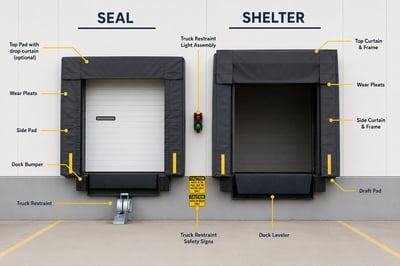
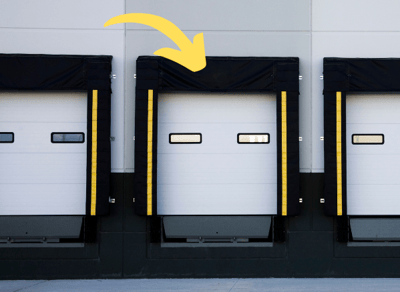
Dock seals are compression-style pads installed around the perimeter of the loading dock door opening.
When a trailer backs into the dock position, the foam pads compress against the trailer body to create a tight seal around the sides and top of the vehicle. The goal is simple: reduce gaps and block outside elements from entering the facility.
Loading dock seals are popular because they provide excellent sealing performance while typically requiring less upfront investment than some alternative systems. For many facilities, they’re an efficient and cost-effective way to improve environmental control at the loading dock.
One reason they are widely used is because they create an extremely tight seal when trailer sizes remain relatively consistent. That tight compression helps minimize airflow, making them especially useful for climate-controlled buildings and operations concerned with energy efficiency.
Cold storage facilities, distribution centers, and manufacturing plants often benefit from the strong sealing performance dock seals can provide.
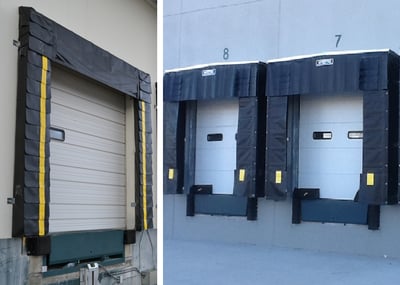
 Dock seals reduce gaps and block outside elements from entering the facility

The Advantages of Dock Seals
One of the biggest benefits of these dock sealing systems is energy savings.
Because the foam pads compress tightly against the trailer, they help reduce air exchange between indoor and outdoor environments. That means HVAC systems don’t have to work as hard to maintain temperatures inside the building. Over time, this can help lower heating and cooling costs significantly.
Dock door seals are also compact. In facilities where exterior space is limited, their smaller footprint can be a major advantage. This is especially important in crowded urban environments like New York City, where space around loading docks is often restricted.
They also tend to work well for facilities that service similar trailer sizes throughout the day. If most incoming trailers are consistent in height and design, they can provide excellent sealing effectiveness.
Additionally, many modern dock seals are now built with reinforced materials designed to improve durability and help reduce wear caused by constant trailer contact.
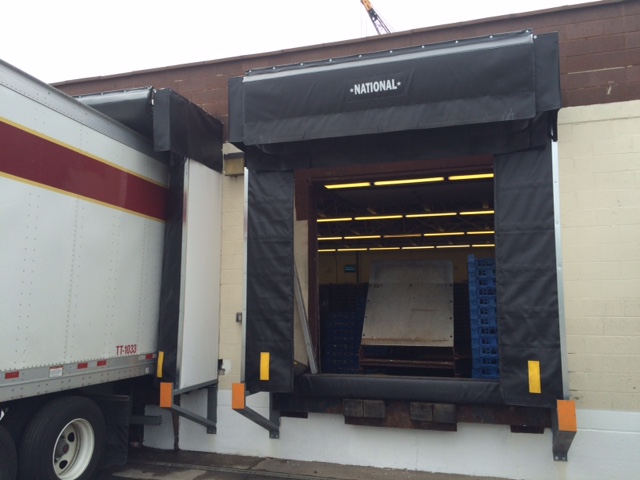
Potential Drawbacks of Dock Seals
Like any loading dock equipment solution, dock seals are not perfect for every application.
Because the trailer compresses directly into the foam pads, high-traffic facilities may experience faster wear over time. Repeated friction from trailers can eventually damage fabric coverings and foam components.
Industrial dock seals can also slightly restrict access to the trailer opening during loading and unloading operations. When compressed, portions of the side pads may enter the trailer opening area, which can reduce forklift clearance slightly. For facilities with oversized loads or operations requiring maximum trailer access, this can become a concern.
Another important consideration is trailer variation. If your facility regularly services trailers with different heights, widths, or styles, these seals may not always provide consistent sealing performance. That’s where dock shelters often become a better fit.
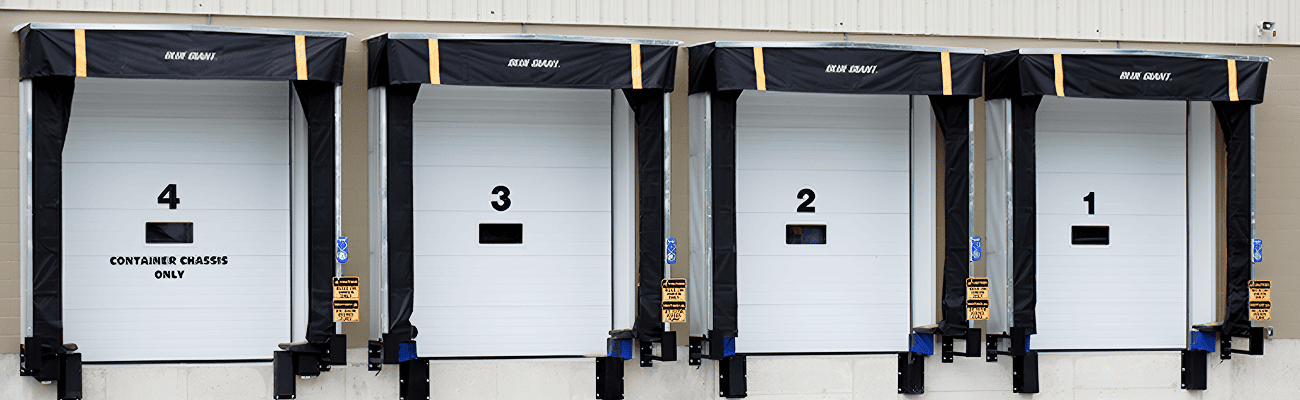
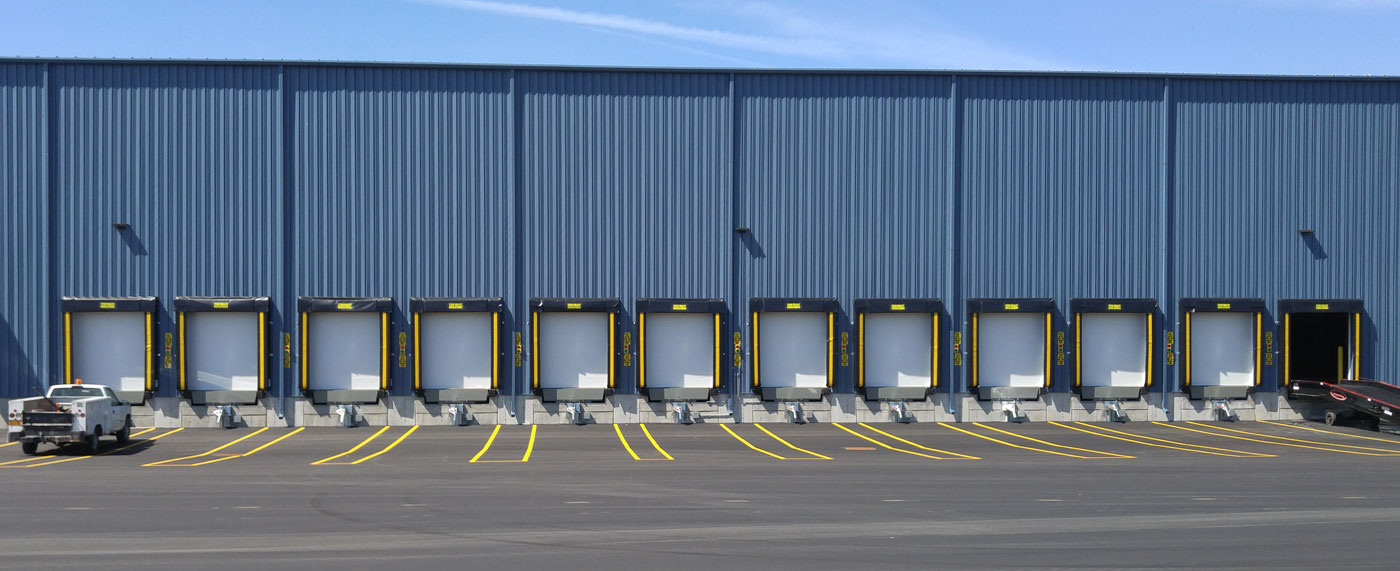 Dock seals and shelters play a crucial role at any loading dock
What Is a Dock Shelter?
Loading dock shelters work differently than dock seals.
Instead of compressing foam pads against the trailer body, they use fabric curtains mounted around the dock opening to create a seal around the trailer perimeter. As the trailer backs into position, flexible side and top curtains form a protective enclosure while still allowing larger access openings.
These dock protection systems are commonly used in facilities where trailer sizes vary more frequently or where unrestricted trailer access is important.
Unlike compression-style dock seals, shelters are designed to accommodate a wider range of trailer heights and configurations. This flexibility makes them especially popular in busy logistics operations, distribution centers, and facilities handling different trailer types throughout the day.
Advantages of Dock Shelters
One major advantage of dock door shelters is improved accessibility. Because the shelter curtains stay outside the trailer opening rather than compressing inward, forklifts and workers typically have more open access to cargo during loading and unloading. This can improve efficiency in high-volume operations where fast movement matters.
They also tend to experience less direct compression damage since trailers are not constantly pressing against foam pads. For facilities with heavy traffic cycles, that can sometimes result in reduced long-term wear.
Another benefit is versatility. Modern dock shelters can accommodate multiple trailer heights and styles more effectively than traditional dock seals. That flexibility helps facilities maintain operational efficiency even when trailer types vary throughout the day.
For warehouses handling regional deliveries, third-party logistics operations, or mixed fleets, this adaptability can be extremely valuable.
Years ago, dock shelters were sometimes criticized for not sealing as tightly as foam dock seals. However, loading dock technology has evolved considerably. Today’s advanced dock shelters are designed with features that dramatically improve sealing performance.
Many newer systems include:
✓ Weighted head curtains
✓ Improved side curtain designs
✓ Enhanced corner sealing systems
✓ Better trailer gap coverage
✓ Reinforced fabric construction
These innovations help reduce air leakage while still maintaining the flexibility and accessibility advantages dock shelters are known for. In many modern facilities, high-quality dock shelters now provide environmental control performance that rivals traditional dock seals.

Which Option Is Better?
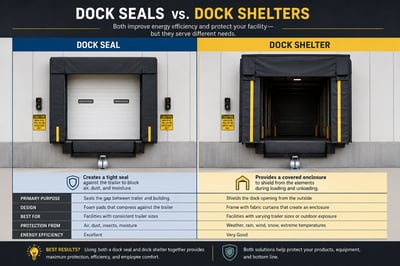
There’s no universal answer. The right solution depends entirely on your facility, traffic patterns, trailer types, operational goals, and loading dock conditions.
Dock seals may be ideal if:
✓ Trailer sizes remain consistent
✓ Maximum energy efficiency is the priority
✓ Exterior space is limited
✓ Climate control is critical
✓ Lower upfront costs are preferred
Dock shelters may work better if:
✓ Trailer sizes vary frequently
✓ Full trailer access is important
✓ Forklift movement needs maximum clearance
✓ High-volume loading operations are common
✓ Flexibility matters more than compression sealing
In many cases, the best choice comes down to balancing environmental control, durability, operational efficiency, and long-term maintenance needs.
Why Professional Evaluation Matters
Every loading dock operates differently. What works perfectly for one warehouse may create problems for another. That’s why working with experienced loading dock professionals is so important when selecting dock seals or dock shelters.
A proper evaluation should consider factors like:
✓ Trailer dimensions
✓ Traffic frequency
✓ Dock door sizes
✓ Building layout
✓ Weather exposure
✓ Energy efficiency goals
✓ Forklift traffic patterns
✓ Product sensitivity
✓ Safety concerns
Facilities throughout New Jersey and NYC often face unique operational challenges due to tight urban environments, older buildings, and high shipping volumes.
Choosing the wrong loading dock sealing system can lead to unnecessary maintenance costs, reduced efficiency, and ongoing environmental issues.
An experienced commercial loading dock company can help identify the best solution based on your specific operational needs.
Final Thoughts
Dock seals and dock shelters may not always get much attention, but they play a major role in loading dock performance.
✓ They help improve energy efficiency
✓ Protect products and inventory
✓ Create cleaner working environments
✓ Reduce outside contamination
✓ Support smoother warehouse operations
In busy commercial facilities across New Jersey and the NYC metro area, even small improvements at the loading dock can create noticeable long-term savings and operational benefits.The key is choosing the right system for your facility.
Whether that means the tight compression seal of dock seals or the flexible accessibility of dock shelters, investing in proper loading dock sealing solutions can help warehouses operate safer, smarter, and more efficiently every day.
Contact us for more information and assistance at 973-471-4060 or email us at info@loadingdock.com.